Search for:
ओला उबर को कमीशन दिए बिना कैब बिज़नेस कैसेशुरू करेंऔरआउटस्टेशन राइड्सपाएं?

क्या आप कैब बिज़नेस शुरू करने में परेशान हैं?

अगर आप कैब सर्विस शुरू करना चाहते हैं या पहले से चला रहे हैं, तो रोज़ाना ग्राहक मिलना मुश्किल हो सकता है। ओला और उबर जैसी बड़ी कंपनियों ने पहले ही बाज़ार पर कब्ज़ा कर रखा है, जिससे नए ड्राइवरों या छोटे कैब मालिकों को कड़ी चुनौती का सामना करना पड़ता है।

अगर आप ऐसी स्थिर और बेहतर व्यवस्था चाहते हैं जिससे सीधे ग्राहक मिलें — बिना किसी थर्ड-पार्टी ऐप को मोटा कमीशन दिए — तो हम आपकी मदद कर सकते हैं।

👉 अभी संपर्क करें
🌐 या विज़िट करें: www.magnifymindsmedia.in

राइड पाने के कुछ सामान्य तरीके:

🔹 रेफरेंस के जरिए – दोस्तों या पुराने ग्राहकों से सिफारिश माँग सकते हैं, लेकिन शुरुआत में यह रोज़ राइड दिलाने में कारगर नहीं होता।

🔹 पारंपरिक तरीका – रेलवे स्टेशन, बस स्टैंड जैसी जगहों पर खड़े रहना। लेकिन यहाँ बहुत ज्यादा प्रतियोगिता होती है और भरोसेमंद तरीका नहीं है।

🔹 ओला या उबर जैसे ऐप्स में रजिस्ट्रेशन – ये विकल्प अच्छा लग सकता है, लेकिन हर शहर में ये ऐप्स अच्छा परफॉर्म नहीं करते और हर राइड पर भारी कमीशन लेते हैं।

अगर आप ओला-उबर पर निर्भर हुए बिना बुकिंग चाहते हैं — तो अपनी खुद की वेबसाइट बनाना एक बेहतरीन समाधान है।

अपनी कैब सर्विस के लिए लीड जनरेशन वेबसाइट कैसे बनाएं?

कैब बिज़नेस शुरू करना एक बात है — लेकिन नियमित ग्राहक पाना और वो भी बिना किसी थर्ड-पार्टी ऐप के? इसका जवाब है — अपनी खुद की वेबसाइट।

एक लीड जनरेशन वेबसाइट से आप सीधे ग्राहकों को आकर्षित कर सकते हैं और ऐप्स को भारी कमीशन देने से बच सकते हैं।

स्टेपबायस्टेप गाइड:

स्टेप 1: डोमेन नाम खरीदें

जैसे — www.aapkacabservice.com
ये आपकी ऑनलाइन पहचान होती है और ग्राहकों को भरोसा भी देती है।
💰 कीमत: ₹500 से ₹700 सालाना

स्टेप 2: होस्टिंग खरीदें

होस्टिंग वह जगह होती है जहाँ आपकी वेबसाइट का डाटा सेव होता है।
💰 कीमत: ₹3,000 सालाना (बेसिक प्लान)

स्टेप 3: प्रोफेशनल ईमेल बनाएं

जैसे — bookings@aapkacabservice.com
यह आपके बिज़नेस को प्रोफेशनल लुक देता है और ग्राहक आप पर भरोसा करते हैं।

स्टेप 4: वेबसाइट बनाएं

WordPress, Wix जैसे आसान टूल से बिना कोडिंग के वेबसाइट बन सकती है। इसमें आप अपनी सर्विस, प्राइसिंग, कांटैक्ट डिटेल और बुकिंग फॉर्म दिखा सकते हैं।

💡 अगर कोई परेशानी हो, तो हमारी एक्सपर्ट टीम आपकी मदद के लिए तैयार है।
👉 संपर्क करें

स्टेप 5: मार्केटिंग शुरू करें (यहीं से असली ग्रोथ शुरू होती है)

सिर्फ वेबसाइट बनाना काफी नहीं है — आपको उसे लोगों तक पहुँचाना होगा। इसके लिए डिजिटल मार्केटिंग ज़रूरी है।

🔹 पेड एड्स (तेज़ नतीजों के लिए)
  • सोशल मीडिया ऐड्स: Facebook और Instagram पर कैब सर्विस का प्रचार करें।
  • Google Ads: जब लोग “outstation cab in [आपका शहर]” सर्च करें, तो आपकी वेबसाइट दिखे।
🔹 SEO (लंबे समय के फायदे के लिए)
  • गूगल सर्च में रैंकिंग बढ़ाएं
  • बिना पैसे खर्च किए, फ्री में लोकल ग्राहक पाएं
🎯 आखिरी शब्द:

अगर आप अपनी कैब सर्विस को बढ़ाना चाहते हैं और डायरेक्ट बुकिंग पाना चाहते हैं — तो अपनी खुद की वेबसाइट बनाना सबसे बढ़िया इन्वेस्टमेंट है।

इससे आपको:

  • फुल कंट्रोल मिलता है
  • ब्रांड वैल्यू बनती है
  • कमीशन देने से छुटकारा मिलता है
🆘 मदद चाहिए?

📞 विज़िट करें: www.magnifymindsmedia.in
📧 ईमेल करें: contact@magnifymindsmedia.in
हमारी एक्सपर्ट टीम वेबसाइट बनाने से लेकर डिजिटल मार्केटिंग तक, हर कदम पर आपके साथ है।
How AI Is Changing the Way We Use Google Ads

How AI Is Changing the Way We Use Google Ads

How AI Is Changing the Way We Use Google Ads

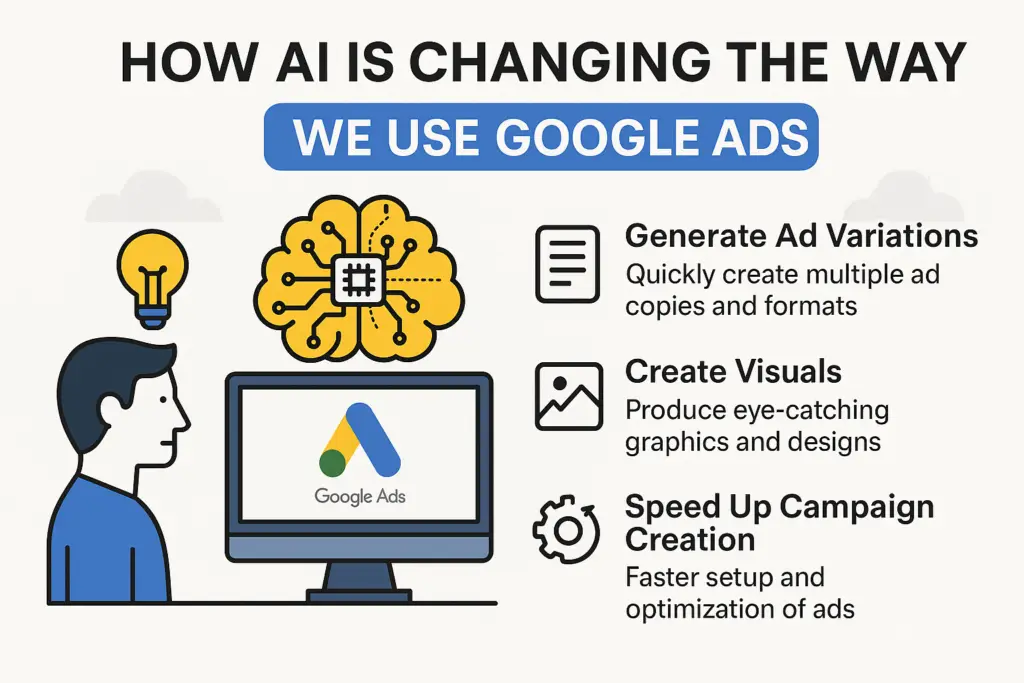
If you think learning Google Ads alone is enough in today’s fast-moving digital world — think again. The truth is, AI is transforming digital marketing, and it’s happening faster than most people realize.

Gone are the days when marketers had to manually write every ad copy or design each creative from scratch. Now, with AI tools like ChatGPT and Canva AI, you can generate high-quality ads, content, and visuals in just a few clicks — often within minutes.

What Does This Mean for Google Ads?

Yes, knowing how to run campaigns in Google Ads is still important — but it’s no longer the only skill you need. What really matters now is knowing how to leverage AI to make your campaigns faster, smarter, and more effective.

Here’s How You Can Use AI to Power Up Your Google Ads:


  1. Generate Multiple Ad Variations with ChatGPT

Using the right prompts, you can ask ChatGPT to write:

  • Headlines that grab attention
  • Descriptions tailored to specific audience segments
  • Variants for A/B testing

💬 Example: “Write 5 Google Ads headlines for a course with job placement in India” — and boom, you get exactly what you need.

  1. Create Stunning Visuals with Canva AI

Need graphics for Display Ads or Performance Max campaigns? Canva’s AI-powered tools let you:

  • Auto-generate creatives based on your brand
  • Customize templates with AI suggestions
  • Save time while keeping your ads visually appealing

No design background? No problem. The AI does the heavy lifting.

  1. Speed Up Campaign Creation

AI can now help you:

  • Choose keywords based on user intent
  • Suggest negative keywords
  • Recommend bidding strategies based on your goals

This helps you launch smarter campaigns faster, and test more things in less time.

The Future is Hybrid: Google Ads + AI Tools

To stay competitive, marketers need to combine their Google Ads knowledge with AI tools. That’s the winning formula. It’s not about replacing your skills — it’s about enhancing them.

The marketers who learn how to command tools like ChatGPT, Canva, and Google’s own AI recommendations will have a serious edge.

So instead of focusing only on learning Google Ads…
Start learning how to work with AI. That’s where the future lies.

Need a Strategy After You Launch Your Ads?

Creating campaigns is just the beginning — what truly drives results is the strategy you follow afterward.

If you need a customized Google Ads strategy tailored to your business goals, we’re here to help!

📞 Contact us at:
🌐 www.magnifymindsmedia.in
📧 Email: Contact@magnifymindsmedia.in

Let’s grow your business with the power of AI and smart advertising.

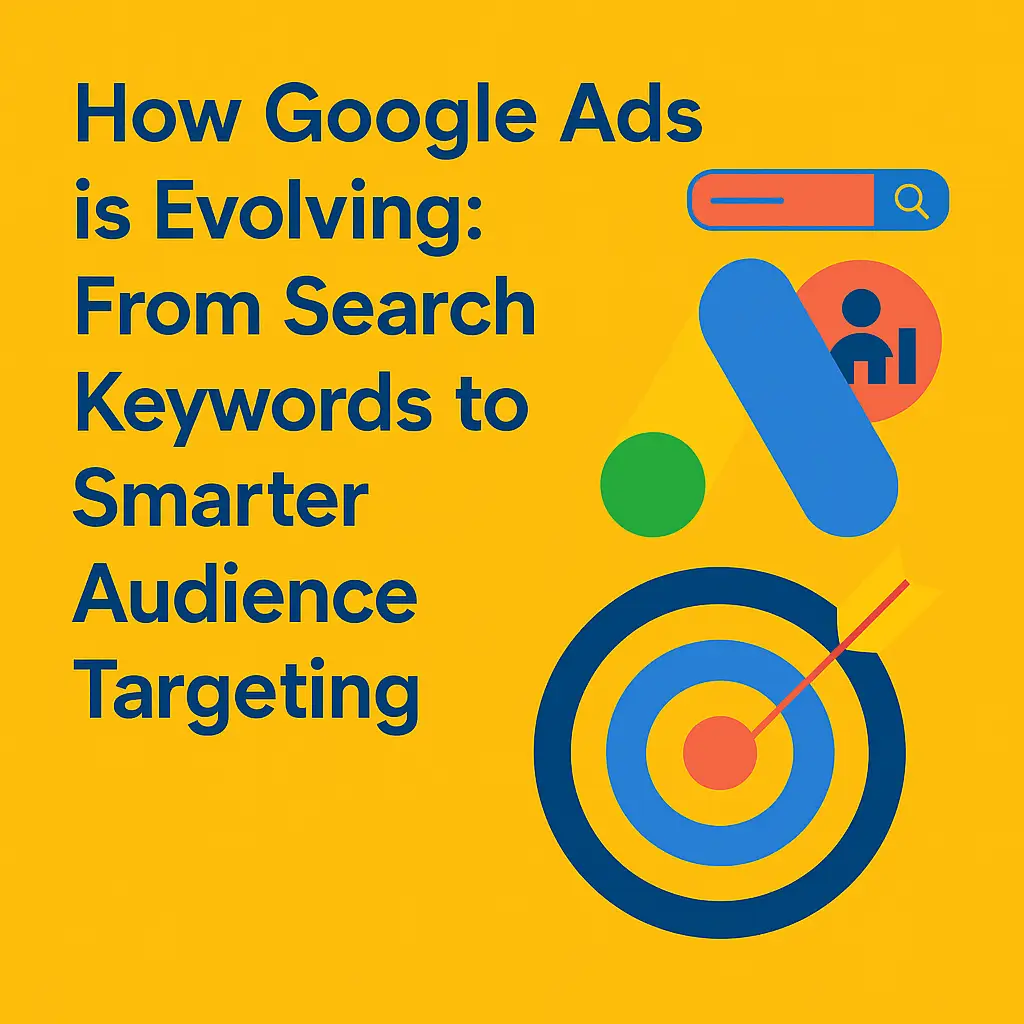
How Google Ads is Evolving From Search Keywords to Smarter Audience Targeting

The way people shop and engage online has changed. Today’s consumers don’t just buy on birthdays or special events—they make purchase decisions anytime, anywhere. This shift in behaviour has led Google Ads to evolve from being keyword-focused to audience and intent-driven advertising.

At Magnify Minds Media, we help businesses stay ahead of these changes by building smart, data-backed ad strategies. Here’s what you need to know about how Google Ads is changing—and how to make it work for your brand.

  1. From Keyword-Heavy to Intent-Driven Ads

In the past, Google Ads was all about keywords. But today, that’s no longer enough. Modern users are influenced by YouTube videos, blog articles, Instagram reels, and more—before they ever type a query into Google.

To keep up, Google now emphasizes intent-based targeting, meaning it looks at user signals like behaviour, demographics, and interests, not just search terms.

🔗 Learn more about Google’s approach to intent-based marketing

  1. Phrase Match Keywords Now Behave Like Broad Match

You might have noticed that phrase match keywords are acting more like broad match—they trigger ads for a wider range of search queries. But don’t worry—this is actually a benefit. With stronger AI and machine learning, Google now delivers more qualified leads, even with broader match types.

Instead of limiting your reach with tight match types, let Google’s AI do the heavy lifting.

Need help setting up intent-based keyword campaigns? Contact our PPC experts at Magnify Minds Media.

  1. Make the Shift to Audience-Based Campaigns

Today’s high-performing campaigns are audience-focused, not keyword-dependent. Two major options from Google include:

🔹 Performance Max Campaigns

These campaigns run across all Google properties—Search, Display, YouTube, Gmail, and Discover—and use AI to target audiences and maximize conversions.

🔹 Demand Gen Campaigns

Demand Gen allows you to reach users across YouTube, Discover, and Gmail using visual, engaging ads that create desire and intent—similar to Meta or Instagram-style campaigns.

At Magnify Minds Media, we design custom Performance Max strategies tailored to your industry, whether you’re in e-commerce, education, real estate, or travel.

  1. New Audience Targeting & Reporting Features

Google has added several improvements in audience segmentation, especially for PMax campaigns:

  • First-party data integration (via Customer Match)
  • Website visitor retargeting
  • YouTube viewer lists
  • Demographic targeting (age, gender, parental status, etc.)

Plus, new asset-level reporting helps you understand which creatives and audience signals are driving real results.

🔗 See Google’s updates to audience reporting here

  1. Focus on Conversions, Not Clicks

Forget vanity metrics like clicks and impressions. Google Ads now lets you optimize for:

  • Conversions (like form fills, calls, purchases)
  • Conversion Value (total revenue or lead quality)

Use bidding strategies like Maximize Conversions or Target ROAS to let Google’s AI optimize in real-time.

💼 Want a conversion-focused strategy tailored to your goals? Let Magnify Minds Media create a custom plan for you.


Conclusion

Google Ads has moved beyond just showing ads based on search keywords. Now, it’s all about understanding user intent, behaviour, and interests—and reaching them across the entire Google ecosystem.

To stay ahead, start shifting your focus toward audience-driven campaigns like Performance Max and Demand Gen, and use AI-powered bidding to drive real business outcomes.

If you’re ready to adapt your strategy for today’s audience behavior, the team at Magnify Minds Media is here to help.

2025 Performance Marketing Trends You Can’t Ignore

If you’re running ads, managing SEO, or growing your brand online, staying ahead in performance marketing is no longer optional—it’s essential. The landscape is evolving fast, and 2025 is set to bring major shifts in how businesses connect with their audiences, generate leads, and measure ROI.

At Magnify Minds Media, we help businesses like yours stay on top of these changes with smart, data-driven strategies. Here are the 7 performance marketing trends for 2025 that you need to know—and how to get ahead of them.

  1. AI Will Be Your Best Marketing Assistant

Gone are the days of manual optimization. In 2025, AI and machine learning will take centre stage. Platforms like Google Performance Max and Meta’s Advantage+ use algorithms to automate bidding, placements, and even ad creatives.

What You Should Do:
Let AI handle the heavy lifting. Use smart tools to identify high-performing audiences, auto-optimize your budget, and test creatives faster. At Magnify Minds Media, we integrate AI across Google and Meta Ads to maximize results for every campaign.

  1. First-Party Data Becomes Gold

With third-party cookies disappearing and privacy laws tightening, first-party data is more important than ever. If you’re not collecting emails, phone numbers, or user behaviour data on your own platforms, you’re falling behind.

Your Move:
Start building email lists, loyalty programs, and on-site lead capture strategies. Tools like HubSpot and Klaviyo are great for organizing this data. And yes—we can help you set that up.

  1. Attribution Will Finally Make Sense

Let’s be honest: figuring out where your sales come from can be confusing. But in 2025, attribution tools are getting better, helping marketers track every click, view, and conversion.

Why It Matters:
Instead of guessing, you’ll know which channels (Google, Facebook, email, etc.) actually drive results. At Magnify Minds Media, we use tools like Google Analytics 4 and custom dashboards to simplify multi-touch attribution for our clients.

  1. Video Ads Will Outperform Everything

Short-form videos (think Instagram Reels, YouTube Shorts, Tik Toks) are killing it right now—and this trend will only grow. People love quick, visual content, and video ads often convert better than static posts.

What You Can Do:
Start creating 15–30 second videos that highlight your product/service in action. Need help with video strategy? Let our creative team guide you.

  1. B2B Brands Will Get More Performance-Savvy

Performance marketing isn’t just for eCommerce anymore. B2B companies are using paid ads, SEO, and content marketing to drive leads and sales.

Here’s How:
Webinars, downloadable whitepapers, and LinkedIn Ads are all powerful lead-generation tools. If you’re in B2B, now’s the time to get serious about intent-based targeting.

  1. No-Code Tools Will Speed Things Up

Need a landing page or automation set up fast? No-code platforms like Zapier and Webflow are making campaign building easier than ever.

Pro Tip:
Stop wasting time on clunky tech. Focus on speed and flexibility. Our team at Magnify Minds Media uses a stack of no-code tools to launch faster and smarter.

  1. Hyper-Personalization Will Win

In 2025, personalized content will no longer be a nice-to-have—it will be a must. Consumers expect ads tailored to their location, interests, and behaviours.

How to Win:
Use tools that allow for dynamic content and geo-targeting. For example, running a cab service in Noida? Your ads should say “Affordable Taxi Service in Noida” with real-time pricing.

Final Thoughts

The future of performance marketing is all about automation, personalization, and data-driven decisions. If you want to scale efficiently in 2025, it’s time to adapt.

At Magnify Minds Media, we specialize in Google Ads, Meta Ads, landing page optimization, and performance analytics. Whether you’re a start-up or an established business, we’ll help you turn every ad dollar into real, measurable growth.

Let’s future-proof your marketing.
👉 Get in touch with our team today

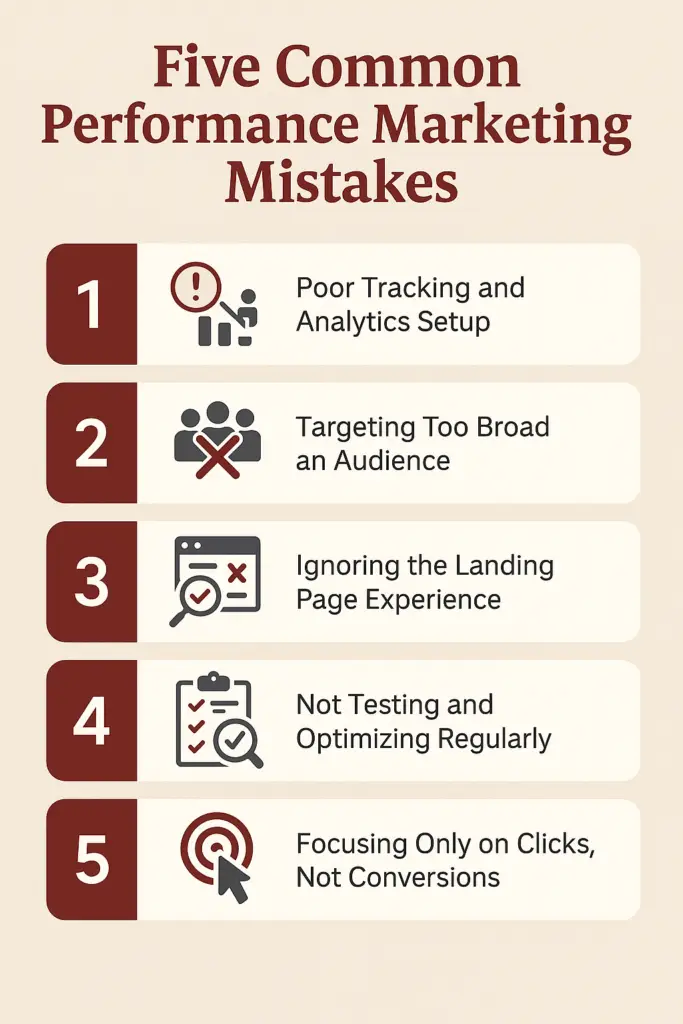
Five Common Performance Marketing Mistakes
5 Common Performance Marketing Mistakes (And How to Fix Them) – By Magnify Minds Media

Performance marketing is a powerful way to drive real, measurable results—like more leads, sales, or sign-ups—while only paying when people take action. But many marketers make simple mistakes that waste money and hurt their campaigns.

At Magnify Minds Media, we help businesses optimize their digital marketing for maximum ROI. Here are the 5 biggest mistakes we see—and how to avoid them:

Mistake #1: Not Tracking Properly

The Problem:
If you don’t set up tracking (like Google Analytics or Facebook Pixel), you’re flying blind—you won’t know what’s working or where you’re losing money.

How to Fix It:

✔ Install tracking tools (Google Tag Manager, Meta Pixel, etc.)
✔ Use UTM tags on all links (so you know which ads bring results)
✔ Set up conversion tracking (form submissions, purchases, calls)
✔ Test regularly to ensure data accuracy

(Need help? Magnify Minds Media can audit your tracking setup!)

Mistake #2: Targeting Everyone (Instead of the Right People)

The Problem:
Showing ads to a broad audience wastes budget on people who won’t convert.

How to Fix It:
✔ Define your ideal customer (demographics, interests, pain points)
✔ Use layered targeting (ex: “Entrepreneurs aged 30-45 interested in digital marketing”)
✔ Try lookalike audiences (target people similar to your best customers)
✔ Continuously refine based on performance data

Mistake #3: Having a Bad Landing Page

The Problem:
Even a great ad fails if your landing page is slow, confusing, or not mobile-friendly.

How to Fix It:
✔ Optimize for speed (use tools like PageSpeed Insights)
✔ Keep messaging consistent with the ad (no bait-and-switch!)
✔ Use a single, clear CTA (e.g., “Get Your Free Consultation”)
✔ A/B test headlines, layouts, and forms

(Our team at Magnify Minds Media specializes in high-converting landing pages!)

Mistake #4: Not Testing & Improving Ads

The Problem:
If you “set and forget” campaigns, you miss optimization opportunities.

How to Fix It:
✔ Run A/B tests on ad copy, images, and CTAs
✔ Monitor performance weekly (pause underperformers, scale winners)
✔ Use automated rules (like “Pause ads with CTR < 1%”)
✔ Try Google Optimize or Meta’s A/B testing tools

Mistake #5: Caring Only About Clicks (Not Sales)

The Problem:
High click-through rates (CTR) mean nothing if visitors don’t convert.

How to Fix It:
✔ Track meaningful KPIs (Cost Per Lead, ROAS, Conversion Rate)
✔ Use conversion-focused bidding (Maximize Conversions, Target ROAS)
✔ Retarget engaged visitors (abandoned carts, page viewers)

The Bottom Line

Performance marketing works—if done right. Avoid these mistakes, and you’ll get better results without wasting budget.

🚀 Want expert help? Magnify Minds Media optimizes campaigns for higher conversions and lower costs.

📩 Contact us today for a free audit!

Google Ads Strategy for Ed Tech Company

1. How We’ll Structure the Campaigns

  • We’ll create separate campaigns based on how ready people are to take action:
  • High Intent: People who are ready to enroll (e.g., “online course with job placement”)
  • Medium Intent: People who are researching options (e.g., “best online courses after graduation”)
  • Low Intent: People just starting to explore career options (e.g., “what to do after college”)
  • We’ll also focus more on mobile users, since most people in India use their phones to search.

2. Choosing the Right Keywords

  • We’ll target people who are serious about getting certified and landing a job.
  • Examples:
  • “Job guaranteed courses in India”
  • “Best online course to get a job”
  • We’ll also show ads to people searching for your competitors, like:
  • “Scaler academy job placement”
  • “Masai school online course”
  • To avoid wasting money, we’ll exclude keywords like:
  • “free course”
  • “YouTube tutorials”
  • “internships only”

3. Smart Budget and Bidding

  • We’ll use Google’s smart bidding to get more leads at a better cost.
  • Most of the budget will go to cities that bring the best results (like Bangalore, Mumbai, Delhi).
  • We’ll increase bids in the evenings and weekends — when people are more likely to browse career options.
  • If a keyword performs well, we’ll increase bids to stay ahead of the competition.

4. Writing Effective Ad Copy

  • Headlines like:
  • “Get Certified. Get Hired.”
  • “Job-Ready Courses with Placement Support”
  • Descriptions like:
  • “Learn from top companies. Crack-Ed helps you get certified and placed.”
  • “Limited seats! Get your dream job with Crack-Ed’s industry-approved programs.”
  • We’ll test different versions to see what gets the best results.

5. Making Sure the Website Converts

  • Separate landing pages for different courses (tech, business, etc.)
  • Fast loading on mobile
  • Show real success stories and company logos
  • Clear buttons like:
  • “Book Free Career Session”
  • “Apply Now”

6. Retargeting (Bringing People Back)

  • If someone visits the site but doesn’t sign up, we’ll show them reminder ads.
  • For example:
  • “Still thinking about your career? Crack-Ed can help!”
  • We’ll also target people similar to those who already signed up.

7. Tracking Calls and Leads

  • We’ll track how many phone calls come from the ads.
  • You can use WhatsApp or a chatbot to answer questions and book sessions automatically.

8. Regular Monitoring and Improvements

  • We’ll check performance every week:
  • Which cities are working best?
  • Which keywords need changes?
  • We’ll test different headlines, landing pages, and calls to action regularly.
  • Always focused on one thing: Getting more students to sign up.


📞 Want to grow your business with AI?
✅ Contact Magnify Minds Media today!
🌐 www.magnifymindsmedia.in
📧 magnifymindsmedia@gmail.com

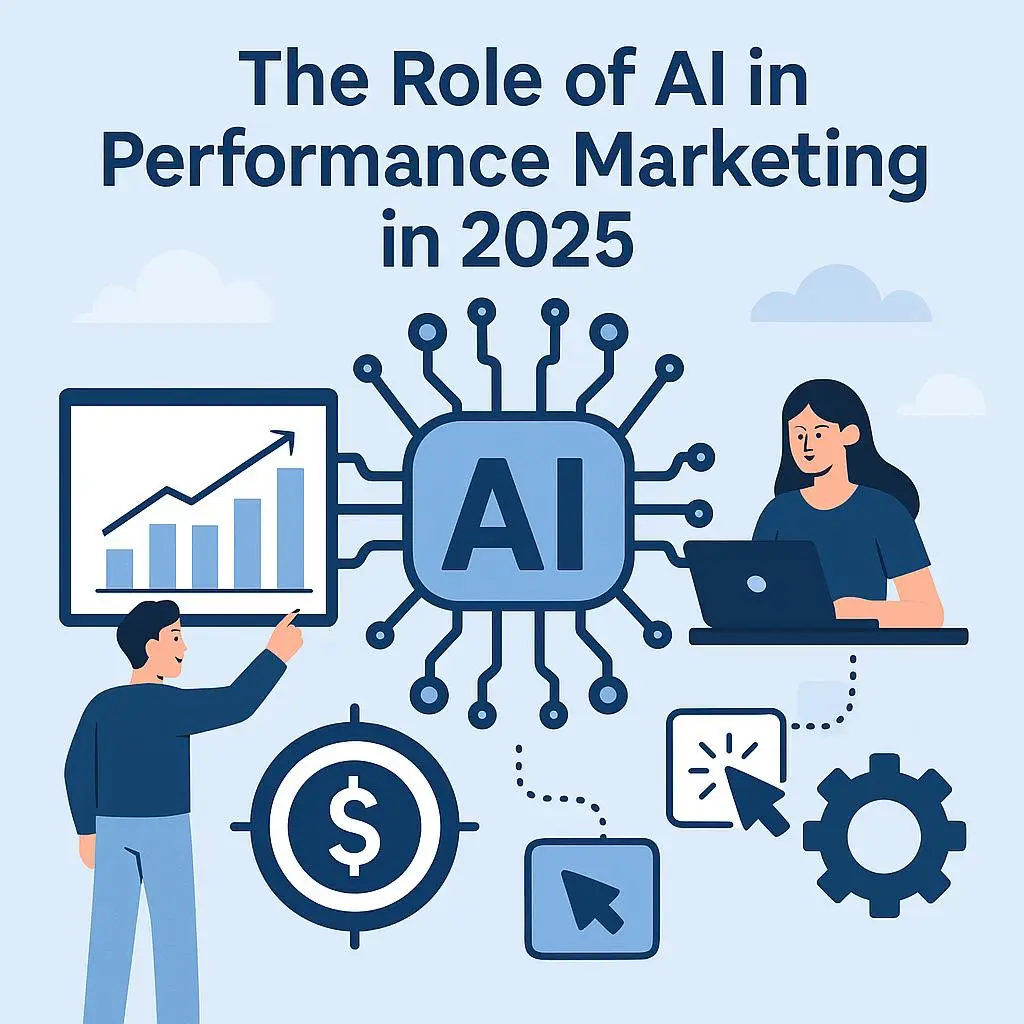
The Role of AI in Performance Marketing in 2025
performance marketing

By Magnify Minds Media

In 2025, AI (Artificial Intelligence) is revolutionizing the way businesses approach performance marketing. From smarter targeting to real-time optimization, AI is helping brands reach the right people, at the right time, with the right message—and at Magnify Minds Media, we’re helping clients harness its full potential.

  1. Smarter Targeting

AI enables advertisers to understand customer behavior and intent better than ever before. At Magnify Minds Media, we use advanced AI tools to create precise audience segments based on interest, demographics, and actions—ensuring your ads reach people who are most likely to convert.

  1. Better Ad Performance

AI constantly tests ad variations (images, headlines, CTAs) to learn which perform best. We implement these dynamic strategies to run high-performing ad campaigns that continually evolve and improve, getting the best out of every ad dollar spent.

  1. Real-Time Optimization

Instead of waiting for reports and making changes manually, AI allows for real-time adjustments. At Magnify Minds Media, our AI-backed systems monitor campaign performance 24/7—pausing underperformers and boosting winners automatically.

  1. Personalized Experience

Personalization is key to conversion. With AI, we deliver ads that match a user’s preferences and past behavior. Whether it’s showing products they’ve browsed or sending a reminder at just the right time, Magnify Minds Media helps your brand stay relevant and persuasive.

  1. Time & Cost Efficiency

AI saves time by automating repetitive tasks, and it saves money by increasing ROI. With Magnify Minds Media managing your performance campaigns, you can trust that your marketing is running smarter—not harder.

Final Thoughts

AI is no longer just a buzzword—it’s the foundation of high-performance marketing in 2025. If your business isn’t using AI-driven strategies yet, now is the time. At Magnify Minds Media, we specialize in AI-powered performance marketing to help businesses grow faster and smarter.

📞 Want to grow your business with AI?
✅ Contact Magnify Minds Media today!
🌐 www.magnifymindsmedia.in
📧 magnifymindsmedia@gmail.com

Let’s build the future of your brand—together.

How to Do Performance Marketing for Real Estate

Introduction

In today’s competitive real estate market, performance marketing has become essential for generating high-quality leads and maximizing return on investment (ROI). Unlike traditional marketing methods, performance marketing focuses on measurable outcomes such as lead generation, conversions, and sales. In this guide, we’ll walk you through an effective performance marketing strategy for real estate businesses.

  1. Understand Your Target Audience

Before launching any campaign, it’s crucial to define your target audience. Identify key demographics such as:

  • Age, income level, and location
  • Homebuyers vs. property investors
  • First-time buyers vs. luxury property buyers
  • Renters looking for new opportunities

By segmenting your audience, you can create personalized ad campaigns that resonate with potential buyers.

  1. Leverage Google Ads for High-Intent Leads

Google Ads is one of the most effective platforms for real estate performance marketing. Use the following strategies to drive high-intent leads:

  • Search Ads: Target keywords like “buy a home in [city]” or “real estate agents near me.”
  • Display Ads: Use visually appealing banner ads to retarget users who visited your site but didn’t convert.
  • Performance Max Campaigns: Automate and optimize your ads across Google’s network for maximum reach and conversions.
  1. Optimize Facebook & Instagram Ads

Social media platforms are powerful tools for reaching potential buyers and investors. Use Facebook and Instagram Ads to:

  • Run Carousel Ads: Showcase multiple property listings within a single ad.
  • Use Lead Generation Ads: Collect user details directly within Facebook and follow up with potential buyers.
  • Retarget Website Visitors: Display personalized ads to users who previously visited your website or interacted with your content.
  1. Utilize Native Advertising for Brand Awareness

Native advertising platforms like Taboola, Outbrain, and Rev content allow you to promote real estate listings through content recommendations. This method increases brand awareness and attracts high-quality traffic.

  1. Implement Local SEO & Google My Business

Real estate businesses should optimize for local searches to attract potential clients in specific locations:

  • Claim & Optimize Your Google My Business Listing
  • Use Location-Specific Keywords (e.g., “best real estate agency in [city]”)
  • Get Reviews & Testimonials to build trust with potential buyers
  1. Leverage Email Marketing & Automation

Email marketing is a great way to nurture leads and convert them into clients:

  • Send personalized property recommendations
  • Automate follow-up emails for leads who showed interest
  • Provide real estate market insights & tips
  1. Analyze & Optimize Your Performance Marketing Campaigns

Regularly monitor and optimize your marketing efforts:

  • Track conversions, cost-per-lead (CPL), and ROI
  • A/B test different ad creatives and messaging
  • Adjust targeting based on campaign performance

Conclusion

Performance marketing is a game-changer for real estate businesses looking to scale their lead generation and sales. By leveraging Google Ads, social media, native advertising, local SEO, and email marketing, you can attract high-quality leads and maximize your marketing ROI.

At Magnify Minds Media, we specialize in creating data-driven performance marketing strategies for real estate businesses. Contact us today to elevate your real estate marketing and generate more qualified leads!

Visit us at: www.magnifymindsmedia.in


Mastering Ecommerce Performance Marketing: Boost Sales & ROI
performance marketing

In today’s competitive online marketplace, performance marketing is a game-changer for eCommerce businesses. It helps drive targeted traffic, increase conversions, and maximize ROI. At Magnify Minds Media, we specialize in creating data-driven strategies to help businesses achieve measurable success. In this guide, we’ll walk you through the essentials of eCommerce performance marketing and how you can leverage it to grow your online store.

Understand Performance Marketing

Performance marketing is a digital strategy where advertisers only pay for specific results, such as clicks, leads, or sales. Unlike traditional advertising, where you pay upfront, performance marketing ensures you spend money only when you get desired outcomes. This approach includes:

  • Pay-Per-Click (PPC) Advertising
  • Affiliate Marketing
  • Social Media Advertising
  • Search Engine Optimization (SEO)
  • Influencer Marketing

Optimize Your Website for Conversions

Before you invest in paid campaigns, ensure your website is optimized for conversions. Here’s how:

Improve Website Speed: A slow website can hurt your conversions. Use tools like Google Page Speed Insights to check and optimize your loading speed.

Mobile Optimization: Since most users browse via mobile, ensure your site is mobile-friendly.

Clear Call-to-Actions (CTAs): Guide visitors to take action, whether it’s adding a product to their cart or signing up for a newsletter.

Trust Signals: Display customer reviews, testimonials, and trust badges to build credibility.

Leverage Google Ads for eCommerce

Google Ads is one of the most powerful tools for eCommerce performance marketing. Use the following strategies:

Google Shopping Ads: Showcase your products directly in search results with high-quality images and prices.

Search Ads: Target high-intent keywords to appear at the top of Google search results.

Remarketing Campaigns: Retarget users who have visited your site but didn’t make a purchase.

At Magnify Minds Media, we specialize in managing Google Ads campaigns to maximize sales and minimize ad spend.

Utilize Social Media Advertising

Social media platforms like Facebook, Instagram, and TikTok offer highly targeted advertising options. Here’s how you can use them:

Facebook & Instagram Ads: Use carousel and video ads to showcase products effectively.

TikTok Ads: Engage younger audiences with short, impactful video ads.

Retargeting Ads: Reach users who engaged with your social media but didn’t convert.

Implement Email Marketing Automation

Email marketing is a cost-effective way to nurture leads and convert them into customers. Key strategies include:

Welcome Emails: Engage new subscribers with discounts and product recommendations.

Abandoned Cart Emails: Remind customers to complete their purchases.

Loyalty Programs: Reward repeat customers with exclusive offers and discounts.

Partner with Influencers & Affiliates

Influencer marketing and affiliate partnerships can help you reach a wider audience.

Micro-Influencers: Work with niche influencers for higher engagement.

Affiliate Marketing: Pay commissions to affiliates who drive sales to your store.

Measure & Optimize Performance

To ensure your performance marketing efforts are successful, track key metrics such as:

Click-Through Rate (CTR)

Conversion Rate

Customer Acquisition Cost (CAC)

Return on Ad Spend (ROAS)

Use tools like Google Analytics, Facebook Ads Manager, and Shopify Analytics to monitor performance and optimize campaigns accordingly.

Conclusion

Ecommerce performance marketing is all about smart investments and data-driven decisions. By optimizing your website, leveraging paid ads, using email marketing, and partnering with influencers, you can scale your business effectively.

At Magnify Minds Media, we help eCommerce businesses maximize their digital marketing efforts with tailored strategies. Ready to grow your online store? Contact us today at www.magnifymindsmedia.in and let’s take your business to the next level!

How to Create Facebook Ads Marketing Funnels In 2025.
Facebook ads Marketing Funnel

In marketing, you may have heard about the marketing funnel. Many businesses use funnels to get sales, but they often seem confusing and complicated.

Some people think a complex funnel works better, but in my experience, simple funnels give better results. I have worked with many businesses and achieved great success using easy and effective funnels.

In this article, I will explain what a marketing funnel is and how you can use a Facebook funnel to get more leads and sales.

What a Marketing Funnel.

Imagine you pass by a gym every day but never stop to inquire about their services or membership plans. One day, the gym owner distributes pamphlets in your neighbourhood, offering 40% off on a three-month membership. This special offer catches your attention, and you decide to visit the gym to learn more about their packages.

After visiting, you decide to purchase the three-month membership. Over time, you enjoy the gym’s facilities, services, and atmosphere, eventually becoming a regular member.

This process represents a marketing funnel. When you first receive the pamphlet, you are at the top of the funnel, showing initial interest. When you decide to join and become a paying customer, you move to the bottom of the funnel, completing the conversion process.

How to Create Facebook Funnel.

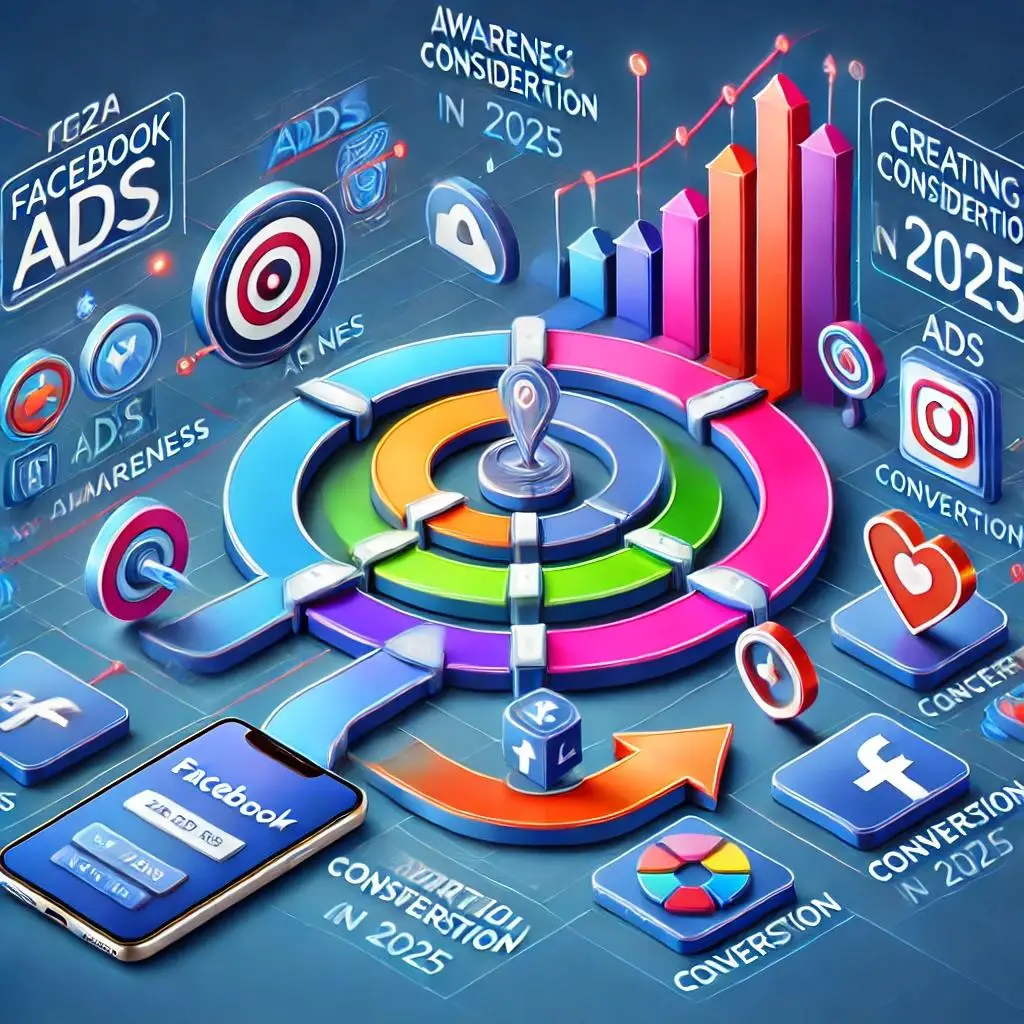
In the example above, we understood how a marketing funnel works. The same concept applies to Facebook Ads. The primary objective of a funnel is to guide potential customers from the top of the funnel (awareness) to the bottom (conversion).

When someone sees your Facebook ad, three key questions come to their mind:

  1. Who are you?
  2. Where are you from?
  3. Why am I seeing this ad?

In a Facebook marketing funnel, your goal is to nurture these potential customers and move them through different stages until they convert into paying customers. Once your target audience reaches the bottom of the funnel, they recognize your brand, understand your offerings, and have already engaged with your business. At this stage, conversion becomes easier.

However, converting an audience at the top of the funnel directly into sales is challenging. The key is to gradually build trust and engagement until they are ready to purchase. This process is known as the Facebook Ads Marketing Funnel.

Top of The Funnel:

At the top of the funnel, the audience is broad, and the primary goal is to reach as many potential customers as possible. When running Facebook Ads, you should focus on Reach, Awareness, and Engagement campaigns.

Based on our expertise, it is best to start with Awareness Ads. At this stage, the objective is not immediate sales but rather brand awareness. Your goal is to encourage audience engagement, such as likes, comments, and shares.

For top-of-the-funnel ads, you should choose display ads or video ads. I personally recommend video ads, as they are more engaging and effective. As a digital marketing agency, we prioritize video ads to ensure potential customers recognize that the ad is published by your brand.

For example, if your ad reaches 100,000 people and 5,000 people engage with it, you can consider moving those 5,000 engaged users further down the funnel.

How to Measure Ad Performance?

To evaluate the effectiveness of your ads, track key engagement metrics, such as:

  • Number of video views
  • Engagement rate (likes, comments, shares)
  • Click-through rate (CTR)

By analysing these metrics, you can determine how well your top-of-the-funnel strategy is performing and optimize your campaign for better results.

Middle of The Funnel.

In the middle of the funnel, your goal is to convert unknown audiences into known audiences, essentially turning cold leads into warm leads. At this stage, the focus is on gathering audience data, such as email addresses and phone numbers.

To encourage users to share their information, your ads should be designed in a way that makes it easy and appealing for them to do so. A great approach is to offer freebies or lead magnets—something valuable in exchange for their details.

For example, as a digital marketing agency, I can offer a free website audit or another attractive incentive. This encourages potential clients to provide their contact information willingly.

By collecting this data, I can ensure that these individuals are actively interested in my services. The next step is to guide them toward the bottom of the funnel, where they are more likely to convert into paying customers.

Bottom of The Funnel.

When we get 5,000 engaged users at the bottom of the funnel, they are our most valuable audience, with a high chance of converting into sales. To make the most of this, we can use two key strategies:

  1. Creating a Custom Audience
  • We take the data of these 5,000 users and upload it to Facebook’s Custom Audience.
  • This allows us to retarget people who already know our brand, increasing the chances of them making a purchase.
  • Since these users have shown interest before, reminding them about our product or service makes conversion easier.
  1. Using a Lookalike Audience
  • After creating a custom audience, we can use Facebook’s Lookalike Audience feature.
  • Facebook finds new users who have similar interests and behaviours
  •  to our 5,000 engaged users.
  • This way, we can reach more potential customers without having to run awareness ads again.

By using custom and lookalike audiences, we target the right people, leading to higher sales and better results for our marketing campaigns.

Want to grow your business?

Connect with us today at magnifymindsmedia@gmail.com or visit our website at www.magnifymindsmedia.in to learn more about how we can help you reach more potential patients and grow your clinic’s online presence.