
How to Create Facebook Ads Marketing Funnels In 2025.
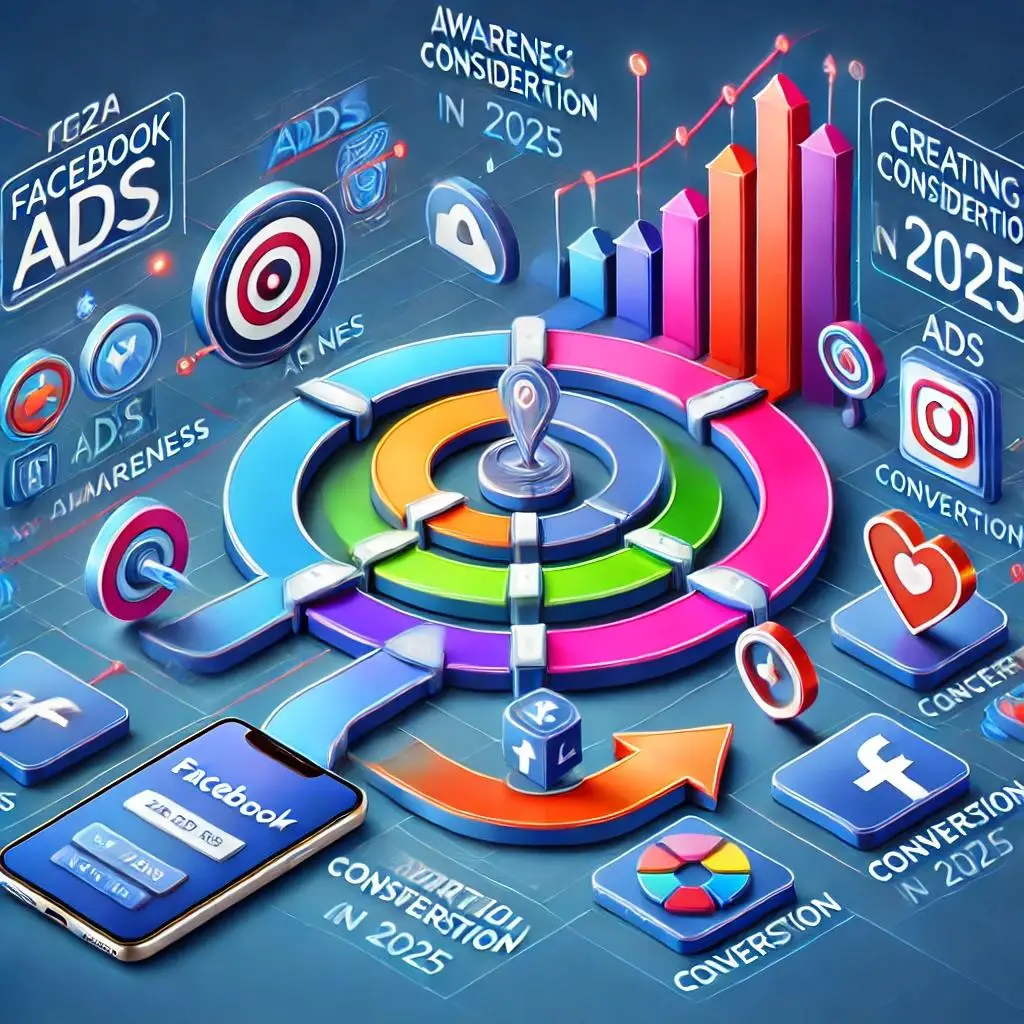
In marketing, you may have heard about the marketing funnel. Many businesses use funnels to get sales, but they often seem confusing and complicated.
Some people think a complex funnel works better, but in my experience, simple funnels give better results. I have worked with many businesses and achieved great success using easy and effective funnels.
In this article, I will explain what a marketing funnel is and how you can use a Facebook funnel to get more leads and sales.
What a Marketing Funnel.
Imagine you pass by a gym every day but never stop to inquire about their services or membership plans. One day, the gym owner distributes pamphlets in your neighbourhood, offering 40% off on a three-month membership. This special offer catches your attention, and you decide to visit the gym to learn more about their packages.
After visiting, you decide to purchase the three-month membership. Over time, you enjoy the gym’s facilities, services, and atmosphere, eventually becoming a regular member.
This process represents a marketing funnel. When you first receive the pamphlet, you are at the top of the funnel, showing initial interest. When you decide to join and become a paying customer, you move to the bottom of the funnel, completing the conversion process.
How to Create Facebook Funnel.
In the example above, we understood how a marketing funnel works. The same concept applies to Facebook Ads. The primary objective of a funnel is to guide potential customers from the top of the funnel (awareness) to the bottom (conversion).
When someone sees your Facebook ad, three key questions come to their mind:
- Who are you?
- Where are you from?
- Why am I seeing this ad?
In a Facebook marketing funnel, your goal is to nurture these potential customers and move them through different stages until they convert into paying customers. Once your target audience reaches the bottom of the funnel, they recognize your brand, understand your offerings, and have already engaged with your business. At this stage, conversion becomes easier.
However, converting an audience at the top of the funnel directly into sales is challenging. The key is to gradually build trust and engagement until they are ready to purchase. This process is known as the Facebook Ads Marketing Funnel.
Top of The Funnel:
At the top of the funnel, the audience is broad, and the primary goal is to reach as many potential customers as possible. When running Facebook Ads, you should focus on Reach, Awareness, and Engagement campaigns.
Based on our expertise, it is best to start with Awareness Ads. At this stage, the objective is not immediate sales but rather brand awareness. Your goal is to encourage audience engagement, such as likes, comments, and shares.
For top-of-the-funnel ads, you should choose display ads or video ads. I personally recommend video ads, as they are more engaging and effective. As a digital marketing agency, we prioritize video ads to ensure potential customers recognize that the ad is published by your brand.
For example, if your ad reaches 100,000 people and 5,000 people engage with it, you can consider moving those 5,000 engaged users further down the funnel.
How to Measure Ad Performance?
To evaluate the effectiveness of your ads, track key engagement metrics, such as:
- Number of video views
- Engagement rate (likes, comments, shares)
- Click-through rate (CTR)
By analysing these metrics, you can determine how well your top-of-the-funnel strategy is performing and optimize your campaign for better results.
Middle of The Funnel.
In the middle of the funnel, your goal is to convert unknown audiences into known audiences, essentially turning cold leads into warm leads. At this stage, the focus is on gathering audience data, such as email addresses and phone numbers.
To encourage users to share their information, your ads should be designed in a way that makes it easy and appealing for them to do so. A great approach is to offer freebies or lead magnets—something valuable in exchange for their details.
For example, as a digital marketing agency, I can offer a free website audit or another attractive incentive. This encourages potential clients to provide their contact information willingly.
By collecting this data, I can ensure that these individuals are actively interested in my services. The next step is to guide them toward the bottom of the funnel, where they are more likely to convert into paying customers.
Bottom of The Funnel.
When we get 5,000 engaged users at the bottom of the funnel, they are our most valuable audience, with a high chance of converting into sales. To make the most of this, we can use two key strategies:
- Creating a Custom Audience
- We take the data of these 5,000 users and upload it to Facebook’s Custom Audience.
- This allows us to retarget people who already know our brand, increasing the chances of them making a purchase.
- Since these users have shown interest before, reminding them about our product or service makes conversion easier.
- Using a Lookalike Audience
- After creating a custom audience, we can use Facebook’s Lookalike Audience feature.
- Facebook finds new users who have similar interests and behaviours
- to our 5,000 engaged users.
- This way, we can reach more potential customers without having to run awareness ads again.
By using custom and lookalike audiences, we target the right people, leading to higher sales and better results for our marketing campaigns.
Want to grow your business?
Connect with us today at magnifymindsmedia@gmail.com or visit our website at www.magnifymindsmedia.in to learn more about how we can help you reach more potential patients and grow your clinic’s online presence.